Wednesday, March 11, 2015

Chowing down on Chowking in Tukwila, WA.


In my happy place at Chowking!
Chowking brings their yummy Filipino-Chinese fast food experience from the Philippines to the US! They have over 19 locations in California, Nevada & Washington.

This Chowking location is conveniently located inside the South Center Mall beside Seafood City Supermarket in Tukwila, WA. I learned that Seafood City is only in the US and serves as a one-stop shop for Filipinos living in the US. They have lots of locations in California, Washington, Nevada and one in Hawaii.

Going to both Chowking and Seafood City was the perfect way to get the taste from the Philippines so close to home. I can't wait to go back!


Best to start a meal with dessert, Chowking's legendary halo halo!
Chowking's beef wonton soup
Chowking's crunchy chicken, so delish!
Visit Chowking
383 South Center Mall
Tukwila, WA

Thursday, January 22, 2015

FOODIEO: Pancit Palabok (Rice Noodles with Shrimp)


During our amazing trip to the Philippines, we were blessed to have eaten so many deliciously authentic Filipino dishes. I especially hunted for childhood comfort food I grew up eating.

On our first day in Manila, we had one of my favourites, pancit palabok, a rice noodle dish influenced by Chinese settlers in the Philippines. There are many varieties of pancit noodle dishes and this particular pancit is called "palabok" because of the bright orange sauce. Palabok is spiced with annatto seasoning (atsuete in Filipino) known as a natural food colouring that also gives dishes a hint of sweet peppery flavour.

My Mom would save pancit palabok for special occasions like on birthdays or Christmas because the shrimp sauce was made from scratch and took time to cook. It was always the crowning glory on the buffet table taking centre stage for it's delectable presentation of thick white rice noodles, coated with a bright orange shrimp-flavoured sauce. It was topped with a colourful assortment of garnishes including a dusting of crushed chicharon (pork crackling) and flaked tinapa, shrimp, pork, boiled eggs, prawns, and finished with a squeeze of sweet citrusy calamansi. Also, it tasted amazing!!!

I was determined to make pancit palabok, for my first time, in my Mom's childhood home in Quezon City. Luckily it was a success and have a FOODIEO: Pancit Palabok to show you how easy it is to make at home.


Ingredients
500g package of Filipino thick rice noodles (lug lug)
1 lb peeled & devined shrimp (heads reserved)
1 lb ground pork
3 tbsp vegetable oil
1/2 yellow onion, diced
3 cloves garlic, minced
1/2 cup celery, diced
1/2 cup carrots, diced
4 cups water
2-3 tbsp soy sauce
2 tsp atsuete powder
1/2 cup cornstarch (+ 1/4 cup water)
2 cups thinly sliced napa cabbage
Salt & pepper to taste

Chicharon Mix
1 tbsp vegetable oil
2 cups crushed chicharon (pork crackling)
1/2 cup tinapa flakes (smoked fish)
2 cloves garlic, minced
1/2 yellow onion, diced

Garnish
1/2 cup cooked pork
5-8 pieces of cooked shrimp
dusting of chicharon mix
4 boiled eggs, sliced in quarters
2 green onions, sliced
8-10 calamansi, halved (or sub with lemon or lime)

Preparation

Noodles
Soak the pancit noodles in cool water overnight to soften. The next day, cook soaked noodles in boiling water for 5 minutes until al dente, then drain and set aside.


Chicaharon Mix
Heat oil in a frying pan over medium heat. Saute onion and garlic until soften, 4-5 min. Then add crushed chicharon and tinapa, mixing together throughly with garlic and onion for 3 min then set-aside.


Palabok
1. Heat sauce pan over medium heat and add 1 tbsp oil. Add in shrimp heads and cook until pink, 3-5 minutes, then set-aside
2. Heat large pot over medium heat and add 1 tbsp oil. Gently add onion, garlic, carrots and celery, cook until soften, 5-7 min. Add cooked shrimp heads, slightly crushing them into veggie mix to unleash more flavour.
3. Add water and simmer for 20 min. Then add soy sauce and atsuete powder, mix thoroughly and let simmer for another 10-15 min.
4. Strain palabok stock, composting solids, and add back over medium heat. Whisk in cornstarch slurry and let simmer for another 2-3 min, until sauce starts to thicken then set-aside.
5. Heat 1 tbsp oil in frying pan and cook shrimp, 3-4 min. Season with salt and pepper then set-aside.
6. Then add minced pork to the same pan and cook thoroughly, 6-8 min. Season with salt and pepper then set-aside.

Pancit Palabok Assembly
In a large pot over low heat, placing 1 cup of palabok sauce then gently stir in the cooked rice noodles and sliced cabbage. Stir in 2 cups chicharon mix and half of the cooked shrimp and pork.
Transfer to a large serving plate and sprinkle remaining chicharon crumbs and top with more palabok sauce, shrimp, pork, eggs, green onions and calamansi. Masarup!!

Saturday, January 10, 2015

FOODIEO: Candice visits the Philippines!


Here's a FOODIEO visiting our family home in Quezon City, Philippines! It's more fun in the Philippines;)


Stay tuned for more Candice's Cusina FOODIEOS from the Philippines!

Thursday, January 8, 2015

Taste of Philippines - Nena's Restaurant


It has been almost 18 years since my last trip back to the Philippines and I finally made the trip back last December with my boyfriend.  Memories with mixed emotions immediately flooded back when my Aunt picked us up from the airport and we sat idle in the dense Manila traffic for over 2 hours on a weekday morning on our way back to our family's home in Quezon City, a region in bustling Metro Manila. This trip, without traffic, should only take 20 minutes.

Regardless, I was in awe watching the colourful city go by as the cab driver expertly maneuvered his way through throngs of every type of vehicle you can imagine plus tricycles carrying passengers beyond capacity, pimped-up jeepneys (a unique Filipino public transportation), and vendors on foot dangerously weaving through traffic trying to sell snacks to anyone who catches their eye.


With the electric scenery, constant honking, smog and stop and go movement of the car, this could either send you into a frenzy or pump you up for the rest of your Filipino journey. We were pumped!


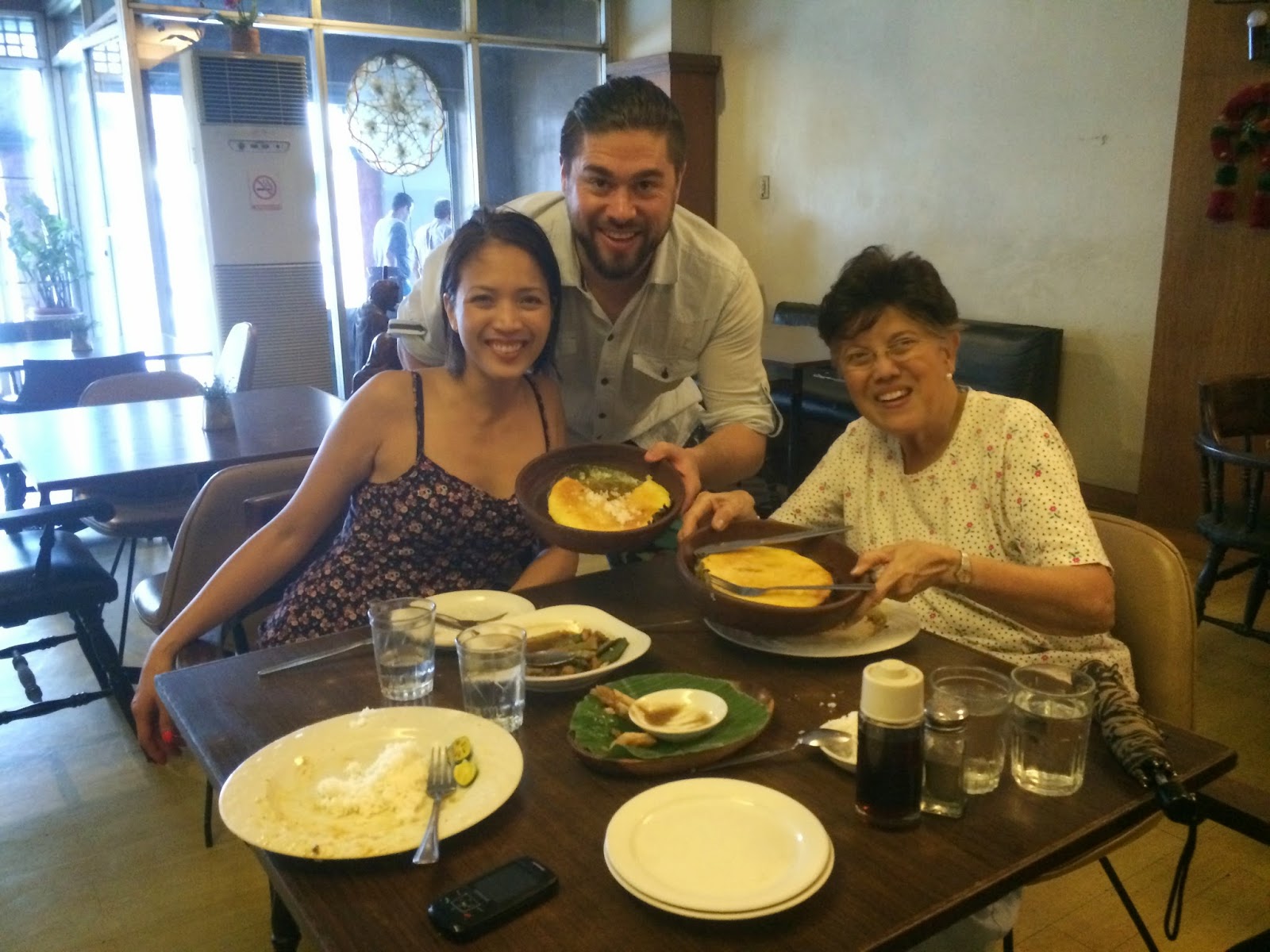
After we arrived to Cubao, Quezon City,  my Aunt brought us to Nena's restaurant and they make the best bibingka. It's one of my favourite Filipino desserts, a soft rice cake cooked in a banana leaf and topped with salted egg, cheese and freshly grated coconut, yum!!!


We also couldn't resist having merienda, a light snack, and tasting other items on their menu. The pancit palabok noodle dish sauce was seasoned perfectly and liked the grilled calamari with the twist of sweet citrusy calamansi.


Pinakbet was a bowl of veggie stew comfort food, okra in any dish is a winner with me.


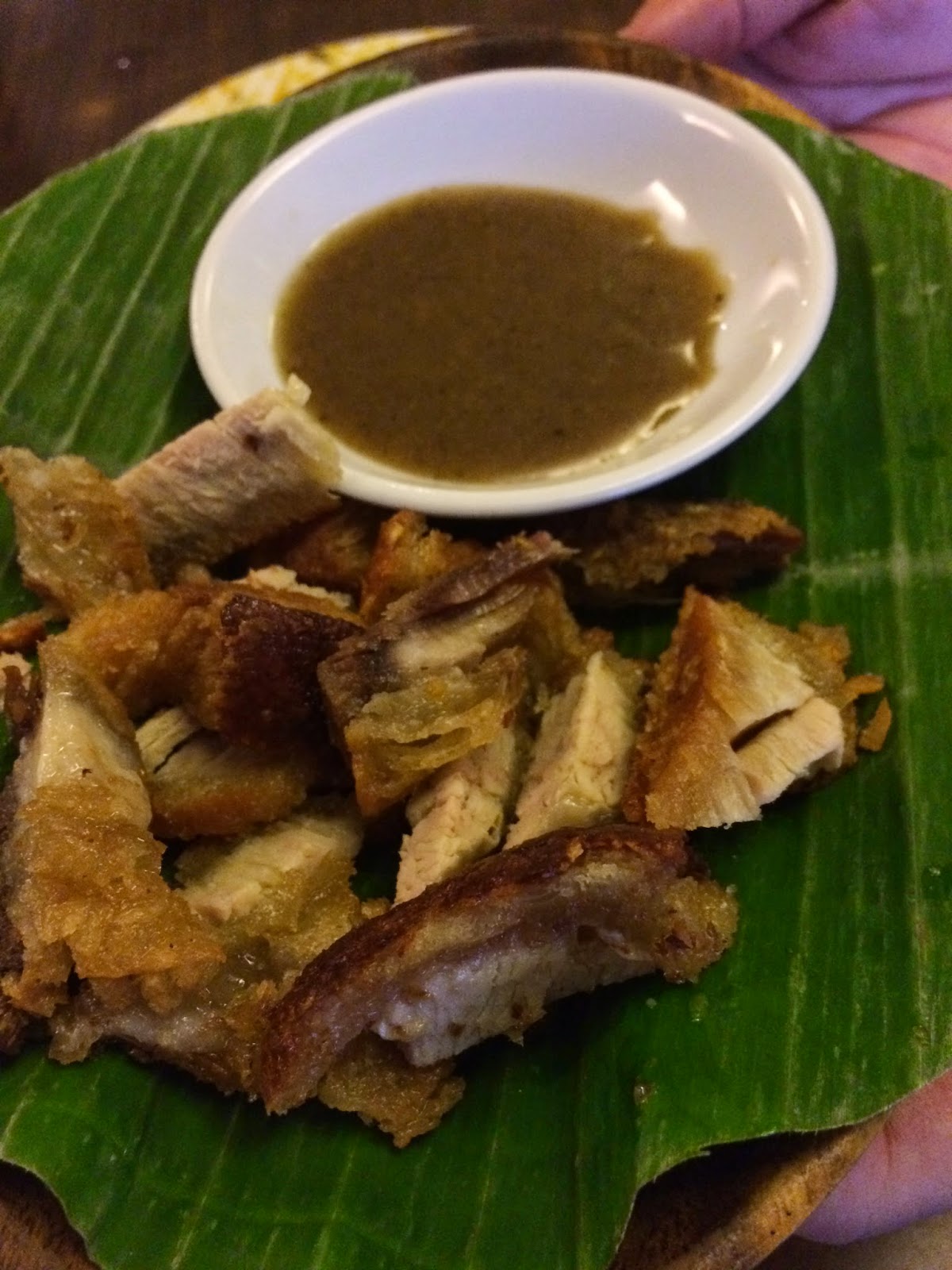
The surprising star was the lechon kawali, a main dish that you can eat with rice, was presented simply on a banana leaf but the taste of crunching the pork's crispy skin with the tender flesh was amplified with the tastiest sweet and sour dipping sauce!


This is just day one of our trip and can't wait to share more delicious Filipino adventures in the coming blog posts.

Nena's restaurant, masarup!!

Thursday, January 1, 2015

Tuesday, November 11, 2014

Candice's Cusina Chicken Adobo

Candice's Cusina's chicken adobo
I love making chicken adobo because it's a one-pot wonder! Simple ingredient list and really easy to cook. Plus it was the first Filipino dish I learned how to cook, taught by my Mom. 

Adobo is a national dish of the Philippines, a cooking method of braising meat, seafood or veggies in vinegar, soy sauce, garlic, bay leaves and peppercorns. So every Filipino family has their own delicious version. 

The one key ingredient in every adobo, is vinegar, introduced by the Spanish in the 1600s to help preserve food when there wasn't refrigeration.  
The vinegar helps to preserve the adobo and actually tastes better when the meat sits in the sauce for 1 to 2 days, so adobo is great for leftovers!

Here's my FOODIEO of how to make my version of chicken adobo. Enjoy!! xx


Ingredients


3lbs of chicken thighs & drumsticks bones-in 
3 tbsp of minced garlic
1 tsp of kosher salt
1 tbsp of whole pepper corns 
1/4 cup of brown sugar
1/4 cup rice wine vinegar
1/4 cup water
1 1/2 cups of soy sauce
1/4 cups of dark soy sauce
2 bay leaves
4 tbsp of coconut oil


Preparation: 

1. In a 3-4 liter sauce pan, put the chicken, garlic, salt, peppercorns, sugar, vinegar, water, soy sauce, dark soy sauce, and bay leafs. Bring to a boil and then simmer for about 30 minutes, stirring periodically. Remove any impurities that float up to the top of the stew.
2. Remove the chicken pieces from the pot, and allow any excess liquid to drain off them. The flesh of the chicken should be very tender and cooked.
3. Allow the stock to reduce by half.
4. Heat the oil in a wok or frying pan. Fry the chicken pieces until they are golden brown and crispy.
5. Transfer the chicken back into the adobo sauce and place onto a serving platter. Serve with steamed jasmine rice. Masarup!

Chicken adobo, masarup!

Sunday, October 12, 2014

Going nuts for Mom's Kare-Kare (oxtail stew)!

Kare-Kare with bagoong
My Mom's kare-kare dish brings back delicious memories celebrating loved ones' birthdays, holidays and parties. It's a savoury melt-in-your-mouth oxtail stew braised in a smooth and rich orange peanut sauce packed with lots of hearty veggies like eggplant, long green beans and bok choi. Kare-kare's bold flavours are enhanced by pairing it with a heaping spoonful of distinctly Filipino flavouring, bagoong, sauteed fermented shrimp paste.

When my Mom taught me how to cook kare-kare, I soon realized why this dish is saved for special occasions. The cooking process is a labour of love, requiring hours to tenderize the oxtail in boiling water plus oxtail is pricey! Knowing how much time and money Mom would spend on kare-kare, makes me appreciate this dish so much more, thanks Mom;)

Similar to many Filipino dishes, kare-kare is considered comfort food but its origins is a complex meld of various cultural influences.

Depending on your source, there is a debate on where kare-kare originated from.  Some say it was introduced by the Spanish who brought in peanuts and annatto seeds when they brought in trade from China and South America. While there are those who claim kare-kare because of the thick peanut sauce looks like Indian curry or by the Japanese term kare (meaning curry) when they were doing business in the Philippines during the pre-colonial times.  Regardless of kare-kare's origins, the dish is uniquely Filipino with the oxtail and bagoong (fermented shrimp paste).  

Mom's awesome kare-kare
I'm also learning more Tagalog while cooking with Mom. Here are some phrases she recently taught me:
Mag luluto ako ng kare-kare. (I'm going to cook kare-kare.)
Sana ma gustu han ninyo ang akin ni luluto! (Hope you'll enjoy what I cooked!)
She's a strict teacher and said practice makes perfect...I'm guessing my Tagalog needs work, haha. It's actually a lot of fun cooking with Mom while she shares stories of growing up in the Philippines to how she taught herself to cook all the while keeping me in check with my budding culinary skills.

For over 2 hours in the kitchen, I was excitedly learning my Mom's kare-kare recipe because it has been lovingly prepared so many times so it's been tried, tested and true. So now, here it is for you!

Kare-kare ingredients
Ingredients
- 1.5-2lbs fresh oxtail, chopped into 2" pieces and washed
- 2 tbsp vegetable oil
- 2 medium Asian eggplant (talong), sliced into 2"  long x 1/4" thick sticks
- 20 pieces of long string beans (sitaw), cut into  2" long strips
- 8 pieces of medium bok choy, cut into quarters lengthwise
- 1 large yellow onion, medium diced
- 3 cloves of garlic, minced
- 1 cup smooth organic peanut butter
- 2 tbsp rice flour
- 1 tbsp annatto powder
- 1 tsp tumeric
- 2 tbsp fish sauce (patis)
- salt & pepper to taste

Preparation
1) Add 3.5 litres of water to a large pot and bring to a boil. Submerge chopped oxtail and boil for 2 hours or until tender. If you cook the oxtail a day before, place in the fridge to continue cooking the following day.
Tip: Since tenderizing the oxtail takes time, Mom recommends that you prep the oxtail (2 hours in boiling water or 6-8 hours in a slow cooker), a day in advance. This way, you can also skim off the fat from the broth the next day for a leaner kare-kare sauce!
2) While the oxtail is cooking, to a heated large sauce pan, add the oil and saute the onion and garlic with a pinch of salt until translucent. Cook the eggplant, green beans and bok choy with oxtail broth, saute until tender. Remove veggies from pan and set aside.
3) Add peanut butter to sauce pan where you cooked your veggies. Stir in 8 cups of oxtail broth until peanut butter is runny and dissolved into liquid. Meanwhile, cook rice flour in a small pan until lightly toasted. Add toasted rice flour to peanut sauce and stir until sauce thickens. 
4) Place tenderized oxtail and veggies into peanut stew and stir. Once oxtail and veggies are coated with sauce, serve with Mom's bagoong with steamed white rice. Masarup!

Mom's bagoong
Mom's bagoong
- 1 tsp of vegetable oil
- 1/2 cup yellow onion, chopped
- 1 clove garlic, minced
- 1 cup tomatoes, chopped
- 1 cup sauteed bagoong (recommended brand: Barrio Bagoong)
- 1/2 tsp of fresh lemon juice
- 1/4 cup of water
- salt & pepper to taste

1) To a heated medium sauce pan, add the oil and saute the onion with a pinch of salt until translucent. 
2) Add the garlic and tomatoes and saute until tender, 5 minutes. 
3) Stir in the bagoong, lemon juice and water to heat through. Add salt and pepper to taste.